Finance
Group accounting, closing, consolidation, intercompany, reporting and controls — the numbers a business is run on.
 NetSuite Business Unit of the JPS-iQ Solutions Group
NetSuite — JPS-iQ is the Oracle NetSuite Solution Provider of the JPS-iQ Solutions Group. We design and implement NetSuite OneWorld for finance and operations teams across Germany and EMEA, with particular depth in multi-entity accounting, consolidation, and manufacturing cost architecture.
An ERP doesn't just need to go live. Finance has to be able to rely on the numbers, operations on the processes, and management on the information those decisions are based on — which is why we treat NetSuite as operational business infrastructure, not an IT project.
NetSuite is the core. Next to it: Zone & Co, Boomi and Celigo – partnerships, not improvisation. Plus DATEV experience for the German finance handover.
 Finance extensions
 Integration
 Automation
Most people reading this page are in one of two situations. Both lead to a real conversation — just a different first one.
We are an Oracle NetSuite Solution Provider because we consider NetSuite an exceptionally capable ERP platform — not because of any single module, but because of what happens when finance, order management, inventory, supply chain, manufacturing, projects and analytics sit on one shared platform, extended through SuiteCloud and connected internationally through OneWorld.
"One of NetSuite's biggest strengths, in our experience, isn't any single module — it's how finance and operational processes come together on one shared platform."
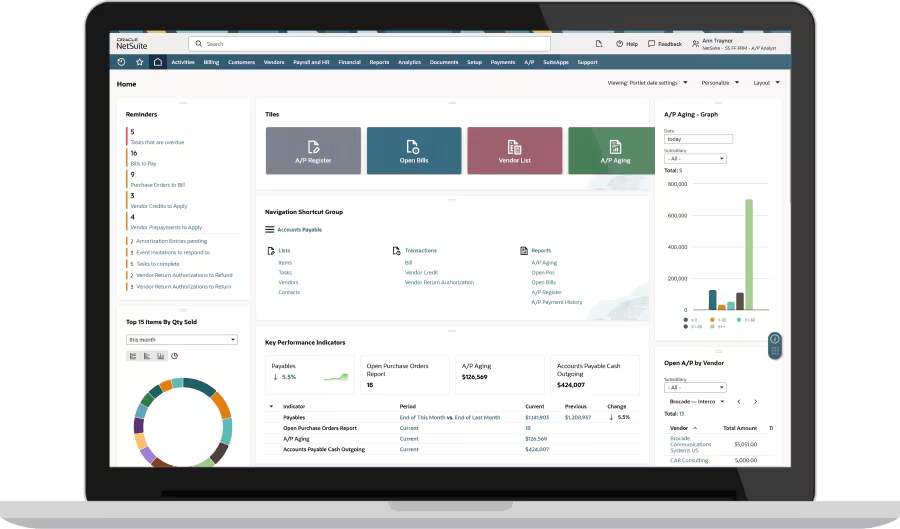
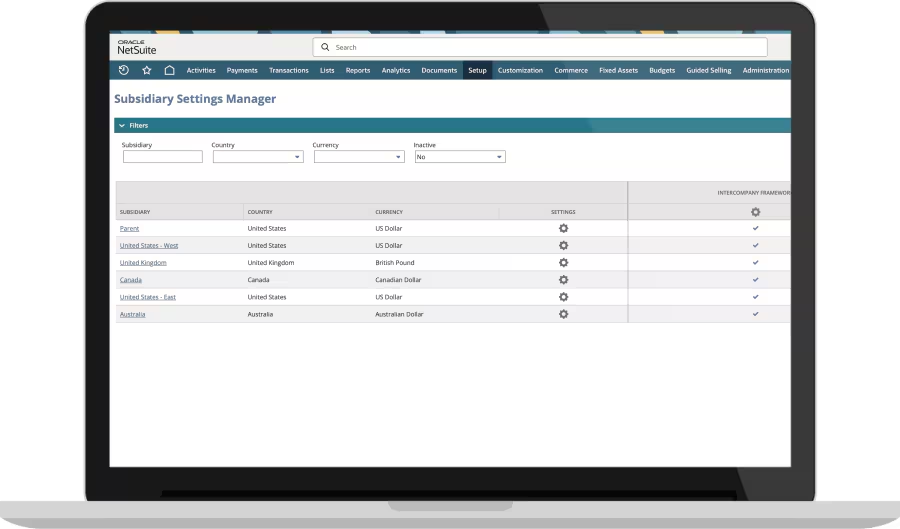
Our job is to turn that platform breadth into your specific ERP architecture — the parts of NetSuite that matter for your business, configured and connected the way your finance and operations actually work.
Most ERP work treats these as three separate conversations, handled by three different people at three different times. We treat them as one.
Group accounting, closing, consolidation, intercompany, reporting and controls — the numbers a business is run on.
Manufacturing, planning, inventory, supply chain, costing and projects — the processes a business runs on.
OneWorld, multi-book, SuiteCloud, SuiteAnalytics, SuiteTax and manufacturing — the platform both are built on.
An ERP programme works well when these three perspectives are brought together from the start — not handed from a sales conversation to a finance workshop to a technical build, each missing what the other two know.
Our differentiation isn't "we implement better." It's that we combine three things usually spread across different people: business and finance understanding, operational experience, and NetSuite/ERP architecture. Several of us have carried real operational finance responsibility ourselves — closing the books, making sure the numbers were right, producing management reporting, keeping cash visible, paying vendors, managing receivables, reconciling intercompany, consolidating a group, answering an auditor's questions, and watching management make decisions on the back of that data. That's why we don't think of NetSuite as a collection of modules. We think of it as a system a business has to be able to rely on every day.
This is what that perspective looks like in practice — not a claim of expertise, but the questions it produces.
ERP projects are multi-layered. Success depends on the business model, process design, finance design, operations design, master data, data migration, integrations, solution architecture, customisation, governance, project organisation, scope, testing, change management, and the operating model after go-live — not on the platform name alone. We treat that complexity as real, rather than simplifying it into a marketing comparison.
We answer these questions before we recommend a target architecture — not a product name.
A short scoping conversation is usually enough to work through these questions together, before any commercial discussion.
Book a 15-min scope callAn industry isn't well represented just because the matching modules are switched on. What matters is the end-to-end process chain behind it — different for every industry, but always connected to finance instead of configured in isolation.
Bills of materials, routings, WIP and costing in one continuous production-to-finance chain.
See NetSuite for ManufacturingSubscription contracts, billing and revenue recognition on one shared data foundation with finance.
See NetSuite for SoftwareProject time, billing models, WIP and revenue brought together all the way to project margin.
See NetSuite for Professional ServicesInventory, fulfillment, returns and payment reconciliation as one continuous order-to-cash chain.
See NetSuite for RetailWhat follows isn't a set of claims — it's how we answer the questions above for finance, manufacturing and governance architecture inside NetSuite: the concrete design decisions we make before configuration starts, and why. It applies across retail, professional services and manufacturing operating models — the finance architecture below is common to all three; the manufacturing architecture is specific to production environments.
The starting point is a single global chart of accounts shared across every subsidiary, with local detail carried through dimensions rather than duplicated accounts. From there, multi-book accounting, intercompany clearing and consolidation mechanics determine whether group numbers are defensible at close — not just producible.
Consolidation and intercompany flow, as designed at blueprint stage: parallel local and IFRS books per subsidiary, in-month intercompany matching, and consolidation applying the group's actual ownership structure.
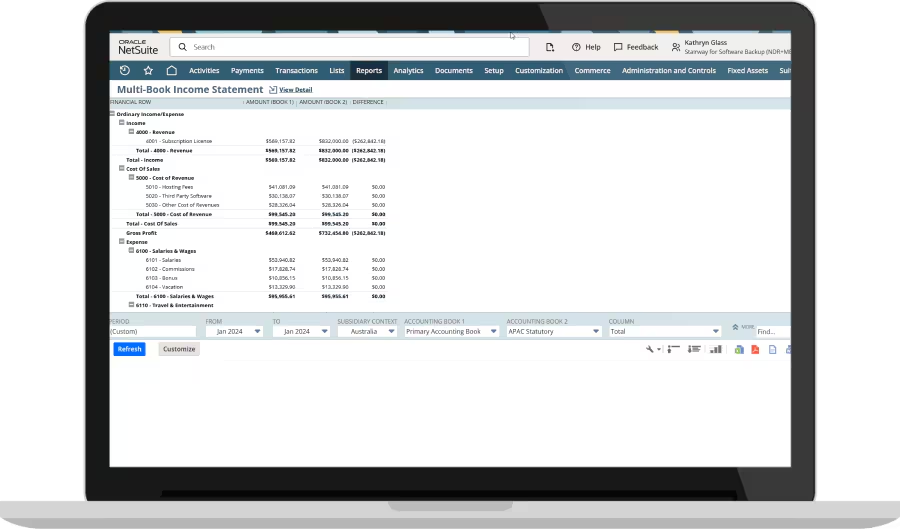
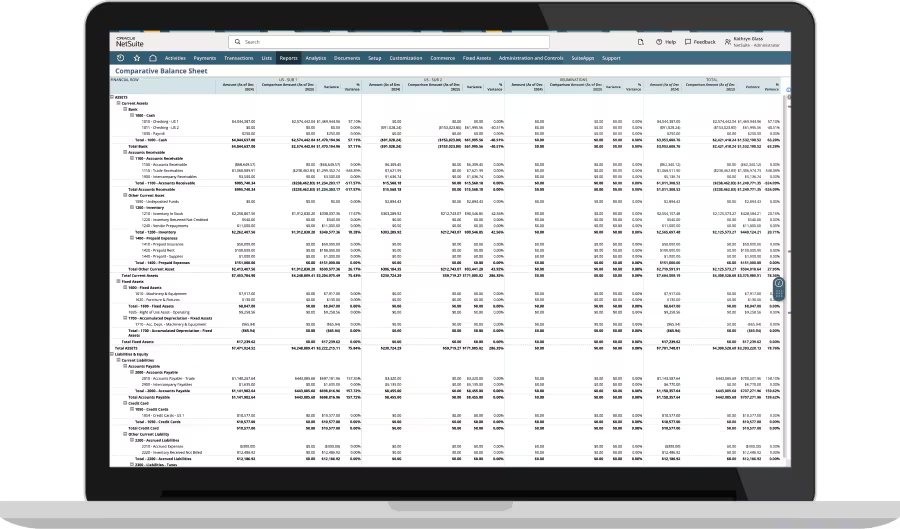
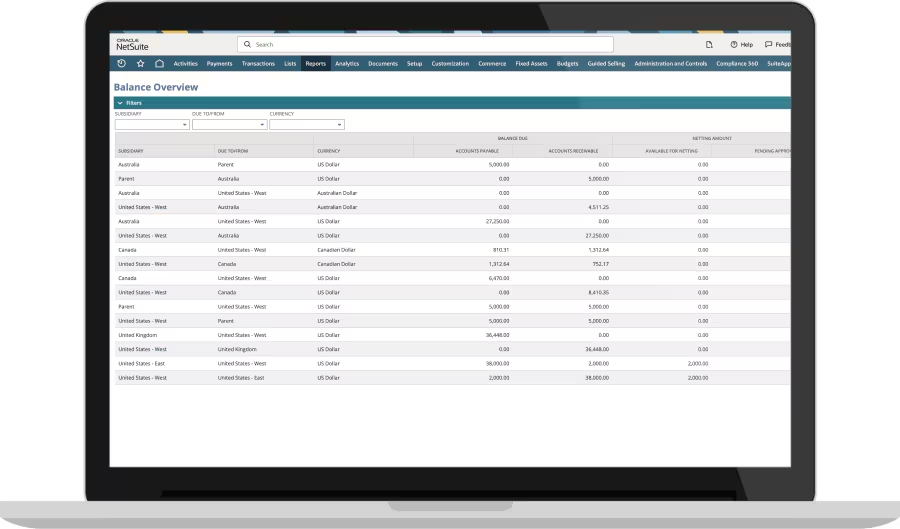
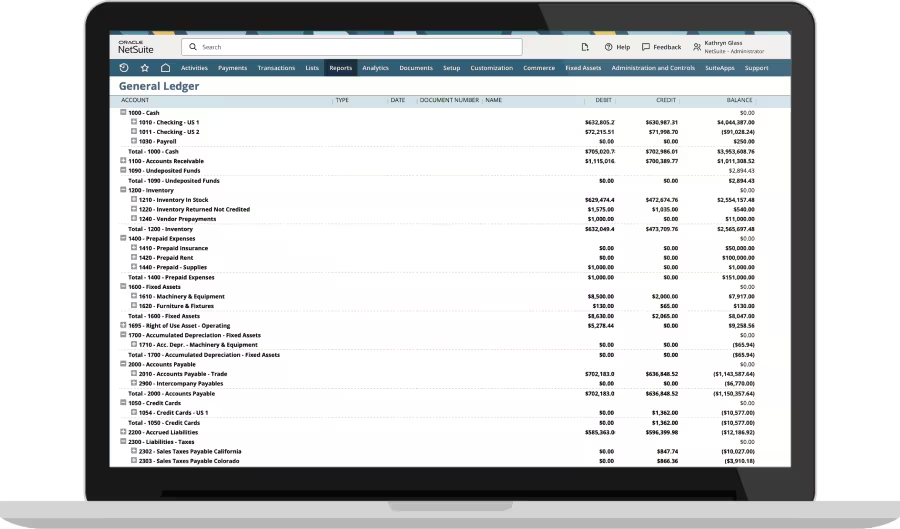
One global chart of accounts, shared by every subsidiary rather than duplicated per entity, with access restricted at the subsidiary level. Local statutory detail — cost centres, functional areas, tax codes — is carried through dimensions (department, class, location and custom segments), not through additional GL accounts.
This keeps the account structure small enough to consolidate cleanly, while dimensions carry as much local detail as controlling actually needs.
NetSuite's multi-book accounting posts one subsidiary transaction into more than one accounting book — for example a local statutory book (HGB, or another local GAAP) and a separate IFRS book — using book-specific rules for revenue recognition, depreciation, leases or provisions.
Both books share the same transactions and the same chart of accounts; they diverge only where the accounting standards genuinely diverge. Finance never re-keys a transaction to produce the second set of numbers.
Intercompany transactions post through a dedicated intercompany account structure and, in our designs, a clearing/matching layer so imbalances are visible and traceable during the month, not discovered at close.
At period end, consolidation applies the group's ownership structure — full, proportional or equity-method depending on shareholding — and eliminates intercompany balances and unrealised profit. Currency translation follows the functional-currency rules for each entity, and the resulting cumulative translation adjustment (CTA) is booked in equity, not left as a plug.
The close runs against a task-dependency calendar: subsidiary close tasks must complete before intercompany matching, intercompany matching before consolidation, consolidation before group reporting.
Segregation of duties is enforced through NetSuite's role and permission model — who can post, who can approve, who can view — rather than through manual sign-off sheets, and approval workflows apply materiality thresholds so small entries route faster than large or unusual ones.
In practice, most close delays trace back to three things: intercompany imbalances found late because there was no in-month matching; consolidation adjustments made by hand outside the system; and close tasks with no enforced sequence, so subsidiaries close in any order and consolidation waits on the slowest one.
Fixing the architecture — matching, sequencing and book design — removes the delay without requiring more finance headcount.
Manufacturing is where a generic ERP configuration most often falls short. Multi-level BOMs, routings, costing method, WIP tracking, MRP and inventory valuation are five interlocking decisions — made once, at blueprint stage, because changing any of them mid-programme is expensive.
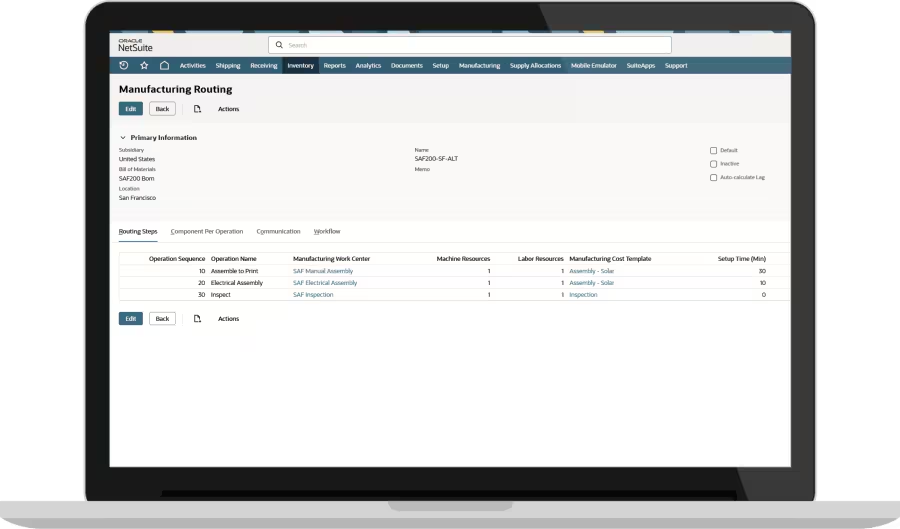
Manufacturing cost flow, as designed at blueprint stage: MRP-driven demand meets a BOM- and routing-defined production model, consumed through work orders, costed against standard with variance visibility, and carried into inventory valuation.
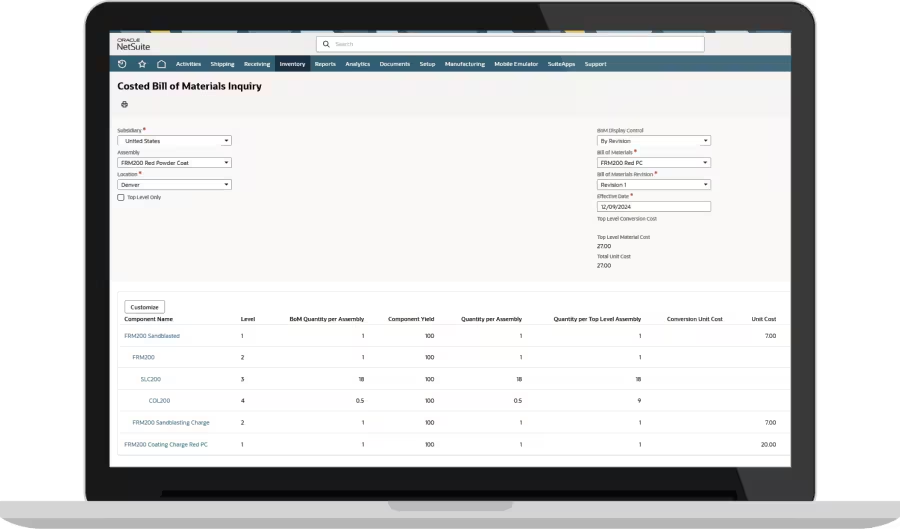
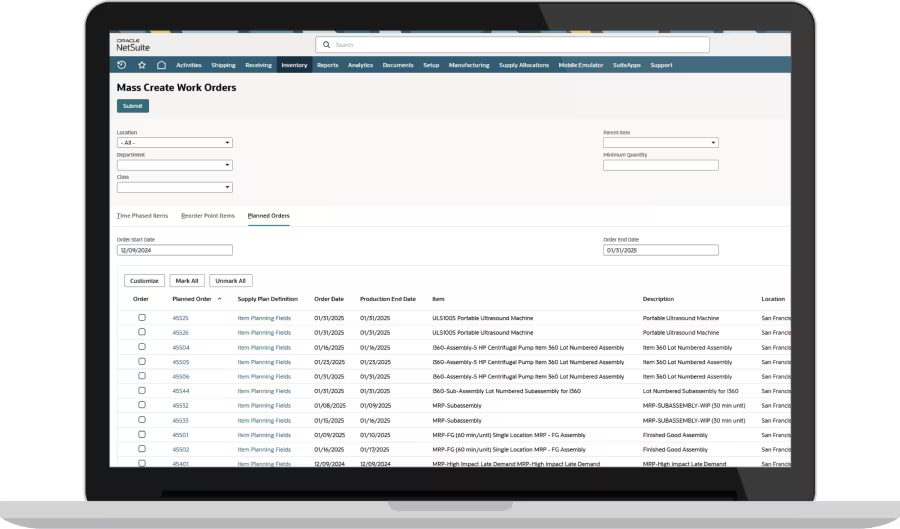
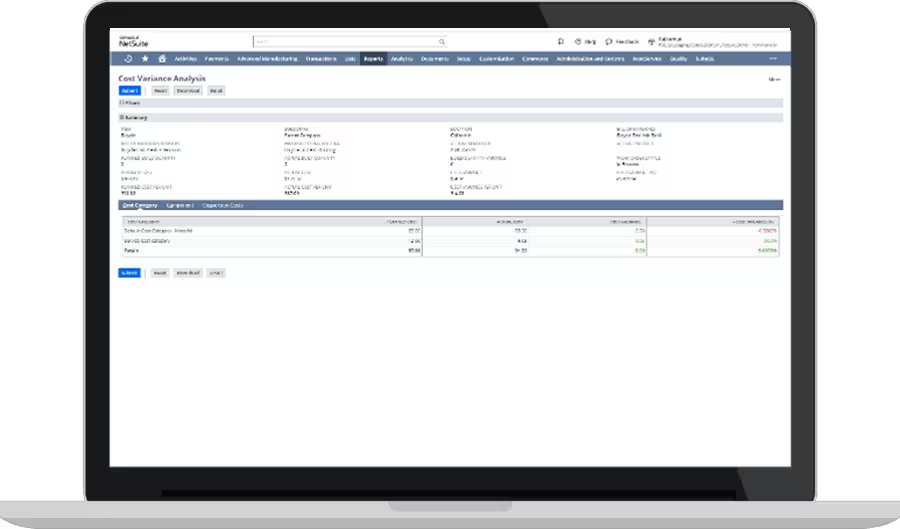
Bills of materials are modelled to the level the shop floor actually needs, including phantom items for sub-assemblies that are never stocked, and co-/by-products where a process yields more than one output.
Routings attach the operations, work centres, and standard run and setup times that convert that BOM into a costed, schedulable work order rather than a static parts list.
Standard costing gives controlling a stable cost to plan and price against, with variances (price, usage, rate) surfaced separately rather than buried in the actual cost. We default to standard costing for repeatable production and use actual or average costing where output is genuinely non-repeatable — for example make-to-order work with volatile input pricing.
The decision is made once, at blueprint stage, because switching methods mid-programme is expensive.
Backflush consumption issues components automatically at operation completion, based on the BOM — appropriate where component usage is predictable and shop floor reporting overhead should stay low. Manual issue gives explicit, transaction-level visibility into consumption — appropriate where component substitution, scrap or yield variance needs to be tracked as it happens.
Most manufacturing clients run a mix, by item or by work centre, not one rule for the whole plant.
MRP nets demand against on-hand and on-order supply, time-phases the resulting requirements, and offsets them by lead time to generate planned orders, with safety stock absorbing forecast error on critical items.
Finite capacity loading then checks those planned orders against actual work centre capacity, rather than assuming infinite throughput; where a work centre is the constraint, that's where the plan gets adjusted, not at the BOM level.
We match the valuation method to what the entity actually needs for statutory and management reporting: standard cost for entities running standard costing, average or FIFO where local GAAP requires it or where standard costing isn't viable.
Valuation method is a finance-architecture decision, agreed with controlling and audit before go-live, not a system default left unexamined.
Architecture decisions only hold up if they survive contact with the next subsidiary, the next NetSuite release, and the next person supporting the system after us.
A first subsidiary is built to a template: chart of accounts, dimension structure, tax and reporting logic. Each subsequent country rollout reuses that template and adds only the genuinely local layer — VAT/Intrastat reporting, SEPA payment formats, DATEV export for the German entities, statutory formats elsewhere — rather than re-designing the finance architecture per country.
This is what keeps a ten-country rollout from becoming ten separate implementations.
NetSuite ships two structured releases a year (for example 2026.1 and 2026.2). We test each release in a sandbox against the client's customisations before it reaches production, and maintain a release-notes review specifically for changes that touch finance or manufacturing configuration.
Nothing reaches the live environment without having run in sandbox first.
Through NetSuite's role and permission model — who can create a vendor, who can approve a payment, who can post a journal — configured to match the client's approval matrix, not a generic template.
We review the role model against the client's actual controls requirements (and their auditor's expectations) at blueprint stage, so segregation of duties is enforced by the system rather than relying on people remembering not to approve their own transactions.
The finance and manufacturing architecture decisions made at blueprint stage are documented, not just implemented, so the next person supporting the system — whether that's us in hypercare or an internal team afterwards — can see why the account structure, book setup or costing method is what it is.
That documentation is also what makes an international rollout to the next entity a repeatable exercise rather than a rediscovery project.
A one-page target architecture — chart of accounts, book design, manufacturing cost flow — is the usual output of our two-week scoping phase, before any commercial proposal. The full manufacturing architecture is also available as a written reference for your conversation with production, controlling and finance.
Request the Manufacturing Architecture referenceNot a module rollout off a checklist. Assessment and blueprint fix the finance and process architecture, the OneWorld/multi-entity structure and the industry logic before any system gets configured — so integration, migration and go-live pay into a target picture, not just the next milestone.
Usually worth a conversation: mid-market and enterprise businesses in retail, services or manufacturing that want a NetSuite architecture built to last several years, or that carry multi-subsidiary finance.
Less of a fit: a single entity with a standard process and minimal complexity looking for a pure copy-paste rollout — more economical partners exist for that.
The engagement starts with a 30-minute conversation on current state, followed by a two-week assessment phase and a one-page target-architecture sketch — only then do we discuss scope, commercials and rollout plan.
Discuss a NetSuite implementationNetSuite is in place, but finance still runs part of its process in spreadsheets. The close takes longer than it should. Reporting doesn't quite add up. Intercompany is matched by hand. Consolidation isn't clean. Nobody fully trusts what MRP suggests. Master data has drifted. Integrations are fragile. Customisations have grown historically, one exception at a time. The original partner isn't the right fit anymore. Or NetSuite is only being used for part of what it could carry.
Sometimes the answer isn't a new ERP. Sometimes it's getting your NetSuite back.
A structured review of configuration, data and process reality against what NetSuite can actually do.
Where the finance and manufacturing architecture diverges from what the business now needs.
Fixing what's actively causing pain — closing delays, broken reconciliations, unreliable reports.
Tightening processes and configuration that work, but not as well as they should.
Extending the system as the business changes — new entities, new countries, new requirements.
Ongoing functional and technical support, for teams that want a partner rather than a ticket queue.
We know what a target design looks like on a whiteboard, and we know what actually has to work on a Monday morning. That's why our involvement doesn't have to end at stabilisation — depending on what's needed, we can stay engaged for individual finance processes, ongoing operational support, or a full managed service, combining functional and technical ownership in one place.
A NetSuite Health Check is usually the fastest way to see clearly what's actually happening in your system — and what it would take to fix it.
Request a NetSuite Health CheckIn real NetSuite projects, we sometimes run into the same functional problem or gap more than once. When that happens, we build a solution for it ourselves. The four modules below exist because of that pattern — not because we set out to build a product line. They're evidence of NetSuite depth, finance depth, and operational experience, applied to gaps we kept encountering firsthand.
Reads incoming PDF vendor invoices with AI assistance and matches them directly against your NetSuite data — clear-cut cases prepared automatically, uncertain ones routed to a review workbench before JPS-iQ DSCAN creates the Vendor Bill. Also passes through ZUGFeRD/XRechnung e-invoice formats directly.
Automates advance/prepayment invoices from sales order through to final invoice — percentage or fixed instalments, multiple advances per order, SuiteTax-based tax splitting, with a central overview and exception monitoring.
Digitises the full dunning process natively inside NetSuite — from previewing open receivables to sending and documenting reminders, with configurable levels, cooldowns and multi-language communication.
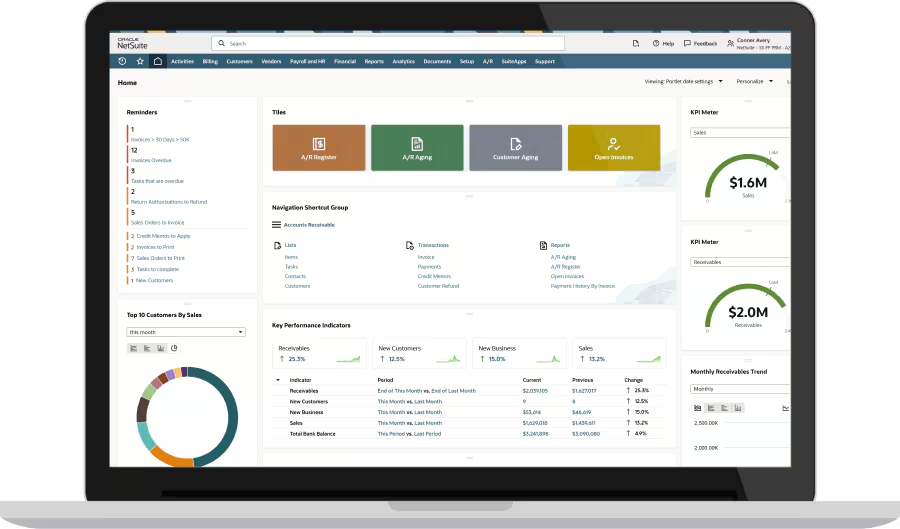
Automates bank reconciliation from statement to approved posting — imports CAMT.053 and CSV, matches movements against invoices, payables and payments, with a central workbench and four-eyes approval.
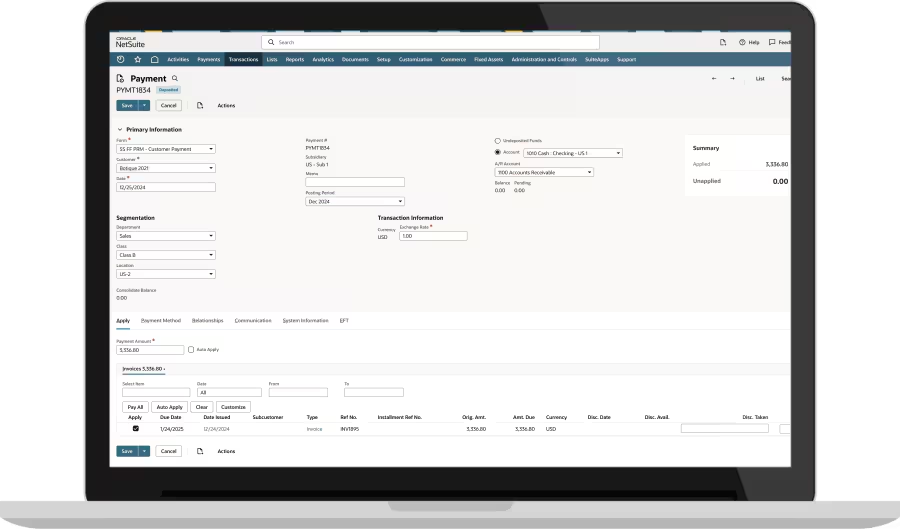
Interested in a live walkthrough of any of these modules? Book your personal demo
The numbers below are the direct output of the mechanisms described in the Architecture section above — book design, intercompany clearing, close-task sequencing — not independent marketing claims.
A 14-entity industrial services group, four years into its ERP, was closing the month in 22 working days — with two vendor proposals on the table for a €6m+, 14-month re-implementation. We didn't replace the platform. We redesigned the finance architecture sitting on top of it.
NetSuite is led personally at managing-director level by people with real, operational finance responsibility — closing books, producing management reporting, and answering to auditors — alongside consolidation and delivery backgrounds. That's who you meet in the first conversation, and who stays accountable through blueprint, delivery and hypercare.
Managing Director · Group COO NetSuite Business Unit
Tech IQ EMEA GmbH — JPS-iQ Solutions Group
"NetSuite delivery is decided in the blueprint, not in the module list. Our job is to make the finance and manufacturing architecture load-bearing, so every phase serves the target state rather than just the next milestone."
Founder & Group Managing Director
JPS EMEA Group Holding GmbH — JPS-iQ Solutions Group
"The finance architecture — chart of accounts, book design, consolidation logic — is what determines whether an ERP programme is still defensible three years later. We design that first, in NetSuite exactly as we would on any other platform, drawing on direct IFRS, HGB and group-consolidation experience."
The questions finance leads, COOs and CIOs actually ask before committing to NetSuite — answered directly.
NetSuite — JPS-iQ is the Oracle NetSuite Solution Provider of the JPS-iQ Solutions Group, focused on NetSuite implementation and long-term architectural ownership. We work close to the NetSuite standard (SuiteSuccess) where it holds, and apply deeper finance and manufacturing architecture where a generic configuration would leave gaps in consolidation, costing or controls.
Industry focus: retail, services and manufacturing. Geographic focus: Germany and EMEA, with a multi-subsidiary centre of gravity.
Most NetSuite implementers are strong on the software side. We combine that with real operational finance and manufacturing experience — which shows up as different questions in a project, not a different sales pitch: how a process is reconciled, who owns the exception, what happens at month-end close, how something consolidates, what the audit trail looks like.
Those questions, not a claim of expertise, are what shape the architecture we recommend. See "Our approach" above for the full list.
Because finance architecture and manufacturing architecture are usually owned by different people — or not owned by anyone in particular. We bring both together at blueprint stage: a chart-of-accounts and consolidation design that holds up to audit, and a manufacturing model with real depth across material flow, costing and planning.
One line of accountability from design through to hypercare, not a module-driven sales process.
That depends on your business model, finance requirements, operating model, countries and regulatory context — not on a generic comparison between platforms.
Our "Our approach" section above lists the questions we use to work through that with you, before we recommend a target architecture.
That's a diagnosis conversation, not a sales conversation. We usually start with a NetSuite Health Check — a structured review of configuration, data and process reality — and take it from there: architecture review, stabilisation, optimisation, or ongoing support, depending on what we find.
See "Already running NetSuite" above for how that path works.
Good fit: mid-market and enterprise in retail, services or manufacturing who want a defensible NetSuite architecture for several years, who have to carry multi-subsidiary finance, or who need to move an unstable NetSuite operation back to a defensible target model.
Less good fit: single-entity standard-process work with minimal complexity that just needs a copy-paste implementation — there are more cost-effective partners for that. Same for clients looking primarily for a low-cost licence reseller.
A 30-minute conversation on current state: operating model, finance architecture, industry depth, time window. No vendor pitch on the first call.
If there's a genuine fit, we move to a two-week assessment phase and a one-page target architecture sketch. Only then do we discuss scope, commercials and rollout plan.
SuiteSuccess stays the default guardrail for finance, order-to-cash, procure-to-pay and reporting wherever the standard is load-bearing. Our manufacturing architecture takes over where production depth needs its own logic: BOM variants, routing scenarios, costing layers, planning and post-calculation.
The two layers are wired to each other deliberately — never blended — so every decision stays traceable.
Architecture comes before module thinking, whichever starting point applies to you. That's where the combination of finance architecture and manufacturing architecture starts — and where NetSuite — JPS-iQ becomes the right partner to have that conversation with.